

.jpg)

The hidden cost of not knowing
You check your phone again. Did they call back? Should you call them? Again?
It's not just the calls. It's the mental tab that never closes. The one that stays open all day, running in the background while you're at work, while you're with your kids, while you're trying to sleep.
Did they eat today? Are they taking their medication? What if they fell and can't reach the phone?
If you're reading this, you already know what we're talking about. The low-grade anxiety that lives in the space between check-ins. This is completely understandable. You're not overreacting.
Peace of mind = clarity (not constant checking)
Real peace of mind isn't zero worry. It's knowing you'll get a clear signal when something is genuinely off.
Peace of mind looks like:
- ✓ Fewer spirals—you're not replaying every conversation
- ✓ Clearer decisions—you have context, not just gut feelings
- ✓ A simple daily signal that says "everything looks normal today"
- ✓ A prompt when something changes—so you know when to check in
This isn't about control. It's about clarity. And for your loved one, it means they can live their life without constant interruptions, without feeling watched, and without giving up the independence that matters so much to them.
Why privacy matters (dignity + independence)
There's a reason cameras feel invasive—because they are. Your parent or loved one doesn't want to be watched. Neither would you.
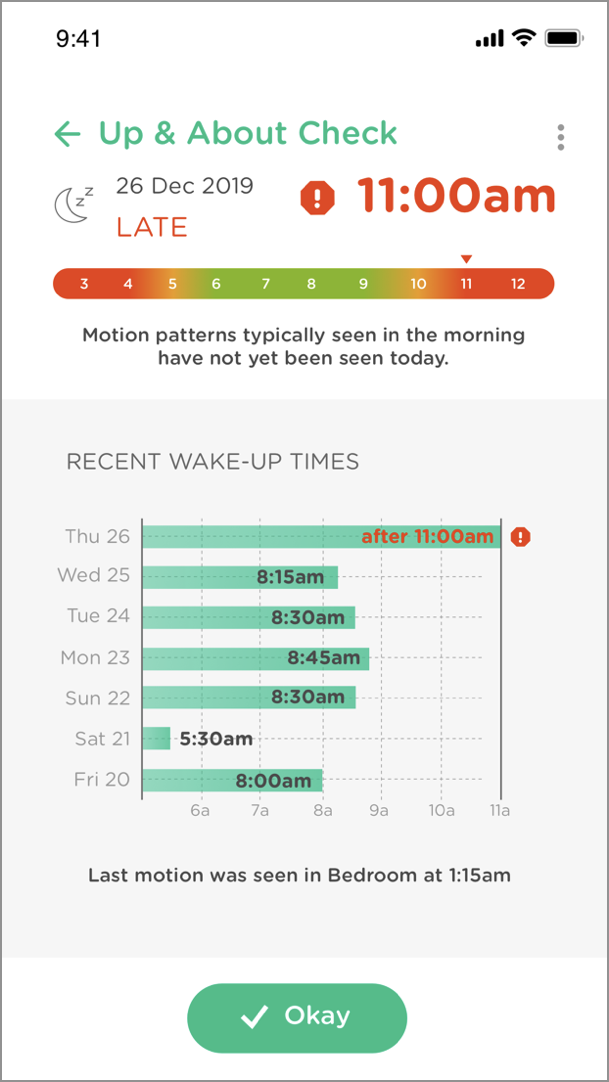
Passive monitoring uses small, discreet sensors that detect motion and environmental changes. They don't record images or audio. They simply learn patterns over time:
- When do they typically go to bed and wake up?
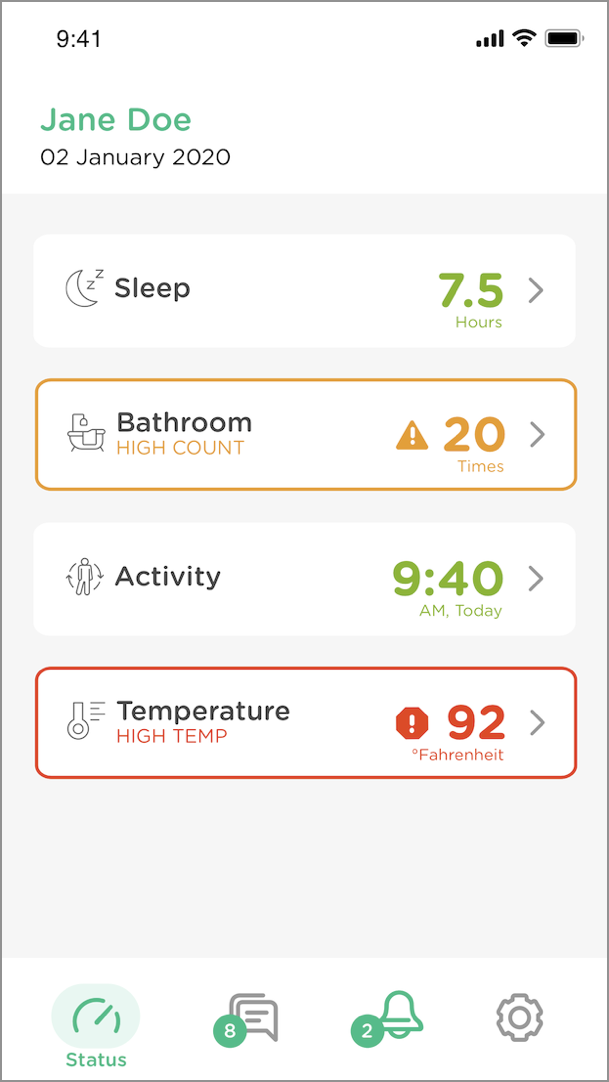
- What's their normal bathroom routine?
- How active are they throughout the day?
- When do they use the kitchen?
- Is the temperature safe?
When something deviates from the learned pattern, you get a notification. You also get a simple daily update: a reassuring "everything looks normal" message when patterns are consistent.
Request a call from a care specialist
Take 60 seconds to share your situation. A specialist will review your answers and help you understand your options.
Important: These alerts are prompts to check in with your loved one—not a diagnosis, not a medical conclusion, and not a substitute for emergency services. If you believe there is a medical emergency, always call local emergency services immediately.